CT 01
1. Core Definitions and Architectural Context
Core Definitions and Architectural Context
At the university level, we define these terms based on their hierarchy in the Data Abstraction Layer, moving from raw bits to complex logical organized structures.
A. Data (The Atomic Unit)
Data is a raw, unorganized representation of facts, concepts, or instructions in a formalized manner suitable for communication or processing. In C, data is always typed. It represents the smallest unit of information that can be manipulated by a program.
* Implementation Note: In C, this corresponds to Primitive Data Types like int, char, or float. A single int x = 10; is a data item occupying 4 bytes of memory.
B. Entity (The Conceptual Object)
An Entity is a "thing" in the real world that has an independent existence and about which we collect data. It is a logical concept rather than a physical one.
* Example: A "Student," "Bank Account," or "Sensor Node."
* Attributes: An entity is defined by its attributes (e.g., a Student has a Name, Roll Number, and GPA) or properties which may be assigned values.

C. Record (The Logical Grouping)
A Record is a collection of related data items (attributes) that represent a single instance of an entity. It treats multiple data types as a single logical unit.
* C Implementation: This is implemented using the struct keyword.
struct Student {
    int roll_no;       // Data item 1
    char name[50];     // Data item 2
    float gpa;         // Data item 3
}; // This entire structure defines a Record
D. Data Structure (The Organizational Framework)
A Data Structure is a specialized format for organizing, processing, retrieving, and storing data so that operations (like searching, sorting, or inserting) can be performed efficiently. It defines the relationship between data elements and the operations allowed on them.
* Key Distinction: While a Record groups data, a Data Structure (like a Linked List or Hash Table) defines how multiple records are stored and accessed in memory.
2. The Relationship Hierarchy
To secure high marks, you must demonstrate how these terms relate to one another in a system.
| Term | Level | C Implementation Example |
|---|---|---|
| Data | Atomic | int age = 20; |
| Entity | Conceptual | The concept of a "User" |
| Record | Aggregate | struct User { int id; char name[20]; }; |
| Data Structure | Organizational | struct User database[100]; (An Array of Records) |
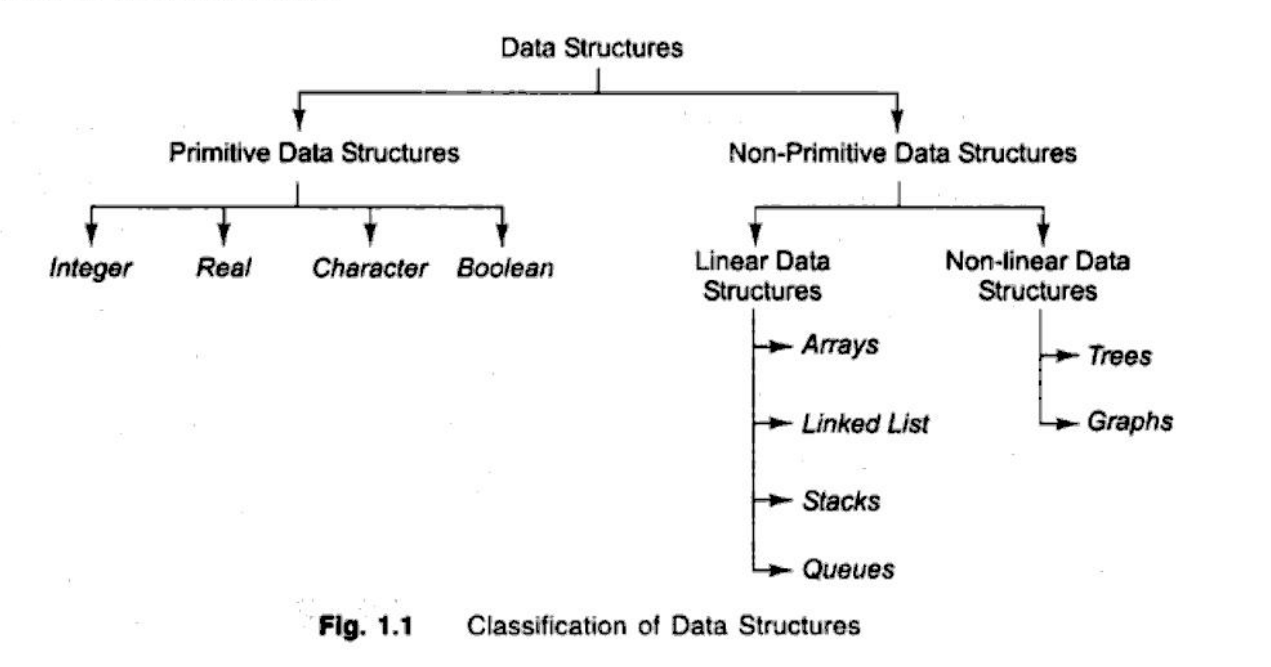
3. Classification of Data Structures